 Image 1 of 1
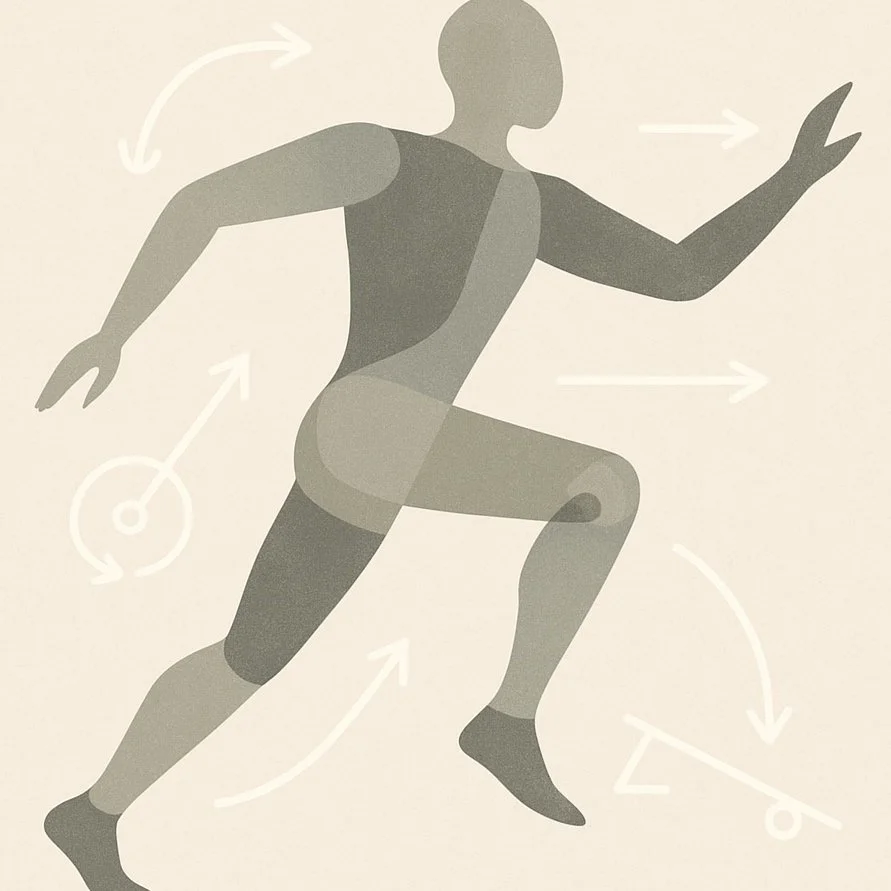
A concise re-framing of human movement that challenges the assumption that symmetry is the goal. This document proposes that asymmetry—in task, structure, rhythm, space, and injury response—is the body's natural design. Through the principle of "one leads, one follows," it shows how creating space through asymmetry resolves shoulder dysfunction, increases range of motion, and applies across all movement: overhead reaching, squatting, gait, and breathing. A philosophy of movement that honors the body's true architecture and liberates athletes from the tyranny of symmetry. Follow to Adarian’s NSCA presentation on Asymmetry for performance.
A concise re-framing of human movement that challenges the assumption that symmetry is the goal. This document proposes that asymmetry—in task, structure, rhythm, space, and injury response—is the body's natural design. Through the principle of "one leads, one follows," it shows how creating space through asymmetry resolves shoulder dysfunction, increases range of motion, and applies across all movement: overhead reaching, squatting, gait, and breathing. A philosophy of movement that honors the body's true architecture and liberates athletes from the tyranny of symmetry. Follow to Adarian’s NSCA presentation on Asymmetry for performance.